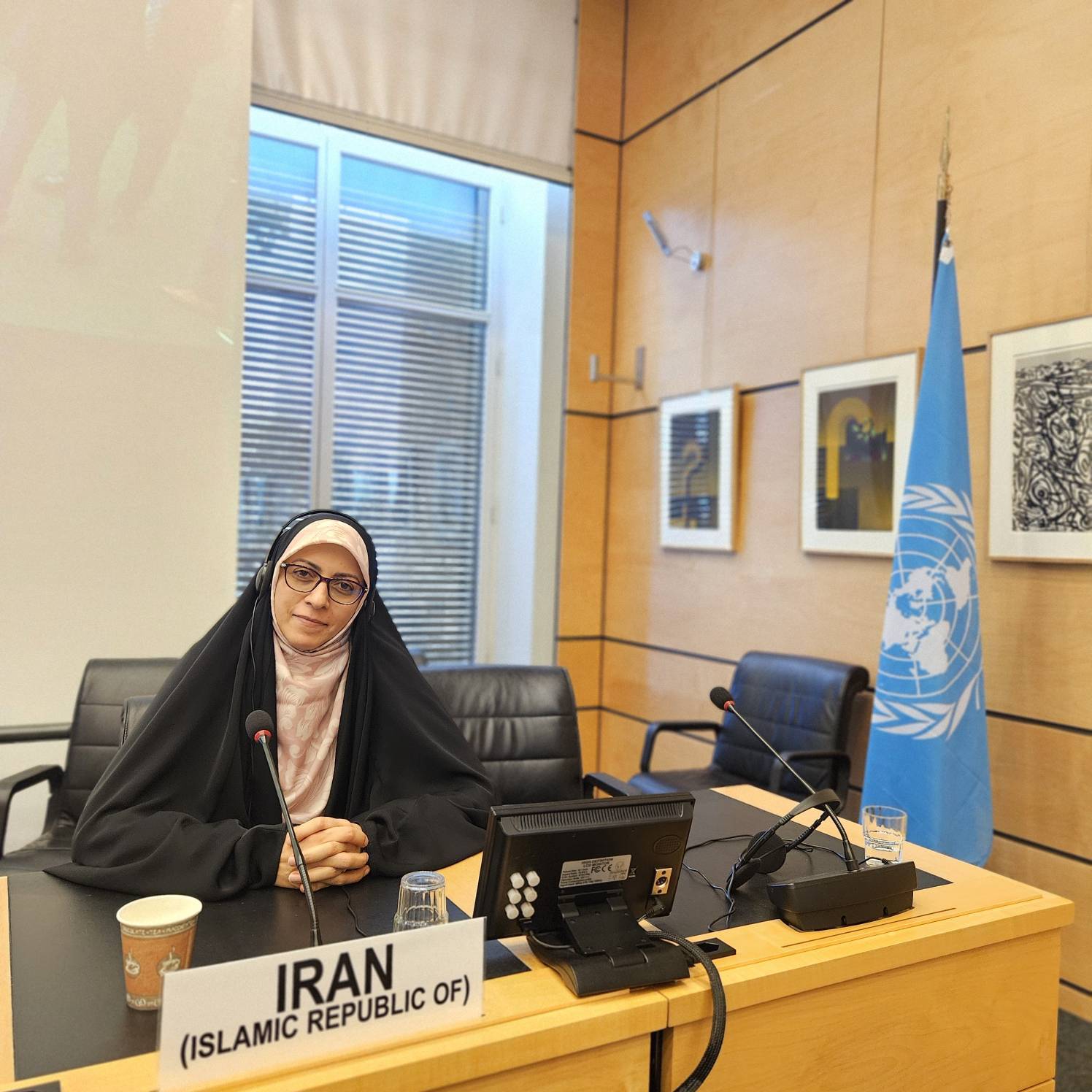
The high-level delegation of the Islamic Republic of Iran, consisting of representatives from the Islamic Consultative Assembly, various government agencies, and judicial officials from the Human Rights council and the Judiciary, attended the 113th session of the Committee on the Elimination of Racial Discrimination, held on Wednesday and Thursday, August 1-8, 2024 of the current year in Geneva. The delegation presented and defended the 20th through 27th periodic reports to the Committee.
The Iranian delegation included representatives from the Islamic Consultative Assembly, the Vice Presidency for Women and Family Affairs, and the Ministries of Foreign Affairs, Interior, Cooperatives, Labor and Social Welfare, Culture and Islamic Guidance, Education, as well as Iran's Human Rights council and the General Prosecutor's Office. They addressed questions posed by Committee members concerning the latest achievements and performance of the country in various areas related to the elimination of discrimination, particularly legislative measures, and policy-making, deprivation reduction, including in underprivileged areas, combating discrimination in education, employment, healthcare, addressing religious and ethnic insults, prohibiting hate speech and incitement, promoting tolerance and dialogue among ethnic groups and religious minorities, and legal protections and support for women and girls, including addressing related doubts and ambiguities.
During the two-day session, the Iranian delegation also highlighted some of the major challenges and obstacles in implementing the provisions of the Convention. They particularly emphasized the negative impacts of unilateral coercive measures and unjust sanctions, drawing the Committee members' attention to these issues.
The Director General of International Affairs of the Vice Presidency for Women and Family Affairs reported on the efforts to enhance Iranian women's, development, and comprehensive participation. She also announced the opening of the National Center for Monitoring and Evaluating Women and Family Affairs in Iran, which aims to plan, formulate policies, and accurately assess the status of women in the country. The center focuses on overcoming barriers and empowering women, particularly in underprivileged areas.
It is worth noting that the Convention on the Elimination of All Forms of Racial Discrimination is one of the nine major international human rights conventions that Iran acceded to in 1967, submitting its periodic reports to the Committee. The Committee on the Elimination of Racial Discrimination comprises 18 independent international experts from various countries responsible for overseeing the implementation of the Convention's provisions by member states.