Climate change is one of the greatest challenges of our time, affecting not only the environment but also the economic, social, and cultural dimensions of society.
Women, as half of the world's population, are more vulnerable to the consequences of climate change and also play a key role in managing, preventing, and adapting to this crisis.
To address the issue, the vice presidency for women and family affairs of the Islamic Republic of Iran decided to establish the Working Group on Women and Climate Change to build a platform to harness women's capacities to address the challenges of climate change and to strengthen women's role in sustainable development. This Working Group seeks to employ national and international knowledge to develop and implement effective strategies through adopting a holistic, preventative, and solution-oriented approach.
This working group also strives to offer effective solutions to mitigate the impacts of climate change through long-term planning and coordinated actions. It recognizes and promotes the key role of women as leaders and decision-makers in this critical journey.
Two meetings of the working group series have been held with the participation of representatives of relevant organizations and institutions.
The First Meeting
The first meeting was held on Tuesday, December 10, 2024, and the objectives of establishing the Working Group were explained in detail. Representatives of each organization exchanged views on their main concerns regarding climate change and its impact on society, especially women, as well as proposals for the implementation of the Working Group. In addition, they stressed that this approach has not received enough attention in various organizations and institutions and it needs to be taken into account.
The Second Metting
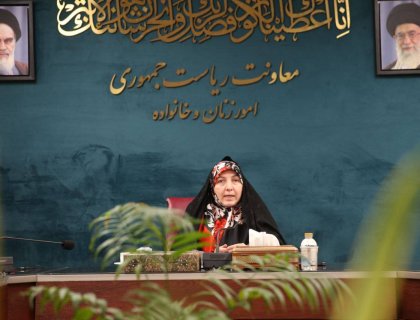
The second meeting of the Working Group on Women and Climate Change, focusing on global challenges and the impacts of climate change on families, was held on Tuesday, December 31, 2024 at the Vice Presidency for Women and Family Affairs with the participation of representatives of relevant Organizations and Executive Bodies.
According to the Communications Office of the Vice President for Women and Family Affairs, the meeting focused on documents and discussions raised during the COP 29 (Conference of the Parties to the United Nations Framework Convention on Climate Change) meetings, as well as the National Environmental Working Group’s Report.
Mrs. Fatemi, International Affairs Advisor to the Vice President for Women and Family Affairs, stated: “We have not specifically focused on the issue of women and climate change so far, so focusing on this will take time and expert commitment. Our objective is to identify the current situation, analyze the impacts of climate change on society and families, especially women, and adopt a proactive and preventive approach. To achieve these goals, we need to be familiar with international documents and brainstorm together.
She added: “It is essential that the Women and Climate Change Working Group follows international discussions and develops practical measures appropriate to the country’s circumstances. This work will include reviewing previous documents and analyzing national and international positions.”
The representative of the Ministry of Foreign Affairs provided an introduction and briefing on gender-related documents. She explained that the COP established the first Lima work program on gender (LWPG) in 2014. The primary objective of this program has been women’s empowerment, and it has been continuously updated until COP25. It was also extended for 10 years at COP 29.
The Deputy of the National Climate Change and Climate Committee outlined the committee's activities and introduced the documents drafted by the Committee. According to the discussion, Iran joined the Climate Change Convention in 1996. Policies issued by the Supreme Leader in 2005, 2009, and 2015 served as high-level guidelines and legal documents in this regard. The executive by-law of the convention was drafted in 2009 and revised in 2012 and 2015. The committee has been active since 1997, holding 350 national meetings and participating in over 100 international sessions.
It should be noted that representative of several organizations including, the Ministry of Agriculture, Ministry of Cooperatives, Labor, and Social Welfare, the Ministry of Energy, new Vice President for Science, Technology, and Knowledge-Based Economy, the Ministry of Oil, and the National Standards Organization shared their view and presented various solutions to address the issues.
At the end of the meeting, it was decided that the working group members would thoroughly examine the existing documents and make appropriate proposals at future meetings.
It is noteworthy that the establishment of this working group marks an important step toward strengthening the status of women in addressing climate change and developing gender-responsive policies in this field.